



Products
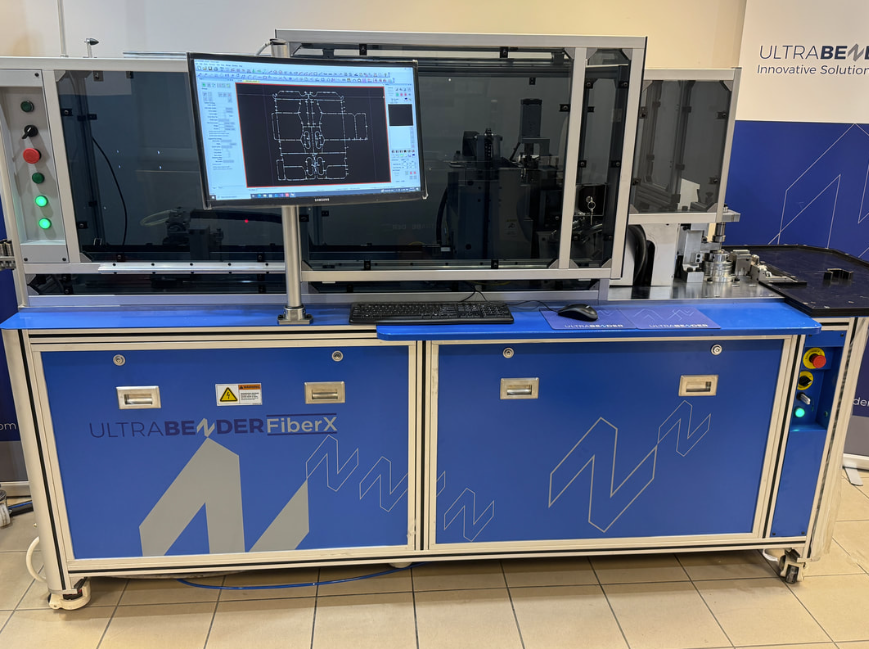
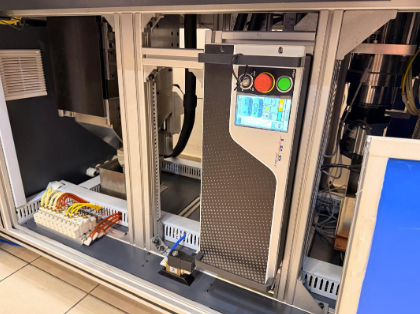
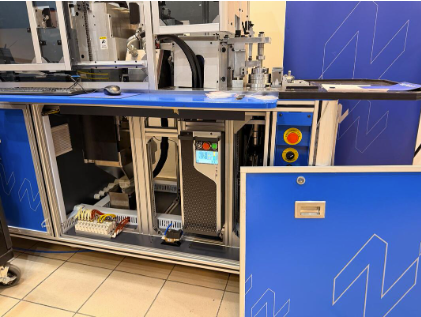
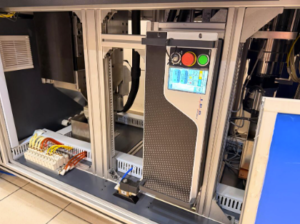
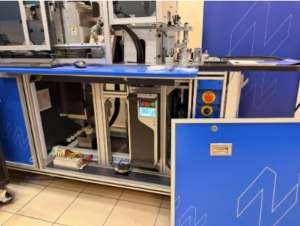

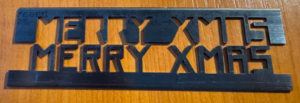
First Fiber Laser Steel Rule bending System
Description
The World’s First Fiber Laser Steel Rule Processing System
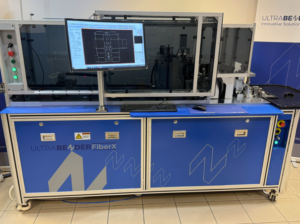
UltraBender FiberX is the world’s first automatic steel rule bending and processing machine that replaces conventional mechanical punching tools with an integrated fiber laser system.
Multiple patents are pending.
Instead of relying on numerous dedicated punching tools, FiberX performs complex rule processing using high-speed laser technology while preserving UltraBender’s proven mechanical bending accuracy. The result is a revolutionary manufacturing platform that offers unprecedented flexibility, lower maintenance and significantly reduced tooling requirements.

Features
Revolutionary Fiber Laser Processing
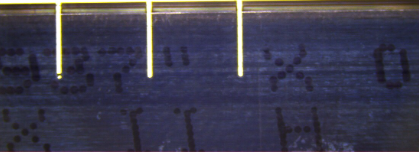
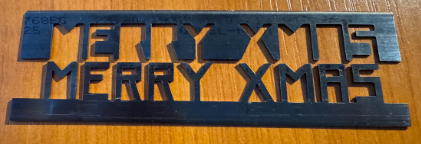
The integrated 2 kW IPG Fiber Laser performs a wide range of operations directly on the steel rule, including:
- Bridge cutting
- Start & End cuts
- Perforation
- Micro perforation
- Cut-Crease
- Nicking
- Circles
- Slots
- Complex internal geometries
- Laser engraving
- Customer-specific shapes
Since no dedicated punching tools are required for these operations, machine setup is dramatically simplified while allowing virtually unlimited geometry creation.
Mechanical Broaching – Where It Matters
While FiberX replaces traditional punching tools with laser technology, broaching is intentionally performed mechanically.
UltraBender uses its proven high-precision broaching wheels developed over many years of industrial experience.
Available broaching operations include:
- V-Broaching (120° / 150°)
- Flat Broaching (2 mm / 4 mm)
- Start & End Broaching
- Side Broaching
- Various angle broaching operations
Mechanical broaching delivers the highest possible edge quality while completely eliminating laser consumption during these operations.
This next-generation technology redefines automatic steel rule manufacturing by combining the flexibility of fiber laser processing with the precision of UltraBender’s proven mechanical engineering. Designed for die makers who want to reduce tooling costs, increase production flexibility and stay ahead of future manufacturing demands.
Related Products
-
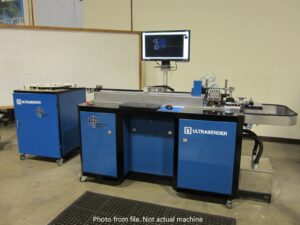
Ultrabender BB-014A Used (AP-10754C)
This computer-automated rule bending machine features automated production, with highly precise electronic systems to control the different…
-
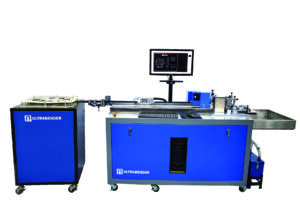
Ultrabender EC-400-B
The computer-automated Rule Bending Machine EC-400-B is an Ultrabender featuring the ability to use different sets of…
-
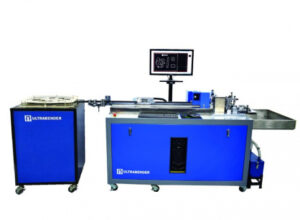
Ultrabender EC-400-BB
The computer-automated Rule Bending Machine EC-400-BB is an Ultrabender featuring the ability to use different sets of…
-
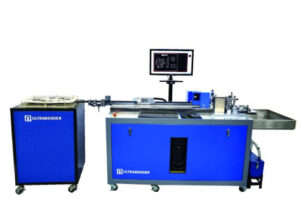
Ultrabender EC-400-BBN
The computer-automated Rule Bending Machine EC-400-BBN is an Ultrabender featuring the ability to use different sets of…
-
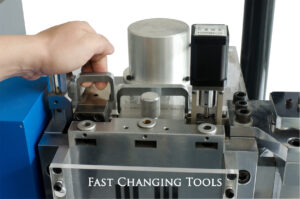
Ultrabender BB-020-DN
This computer-automated Rule Bending machine BB-020 features the ability to use different sets of tools for rule…